Data centers are often described as relatively clean industrial facilities. They do not manufacture products, operate assembly lines, or send fleets of delivery trucks onto local roads.
But behind many of these buildings is a substantial amount of equipment that deserves closer attention: emergency backup generators.
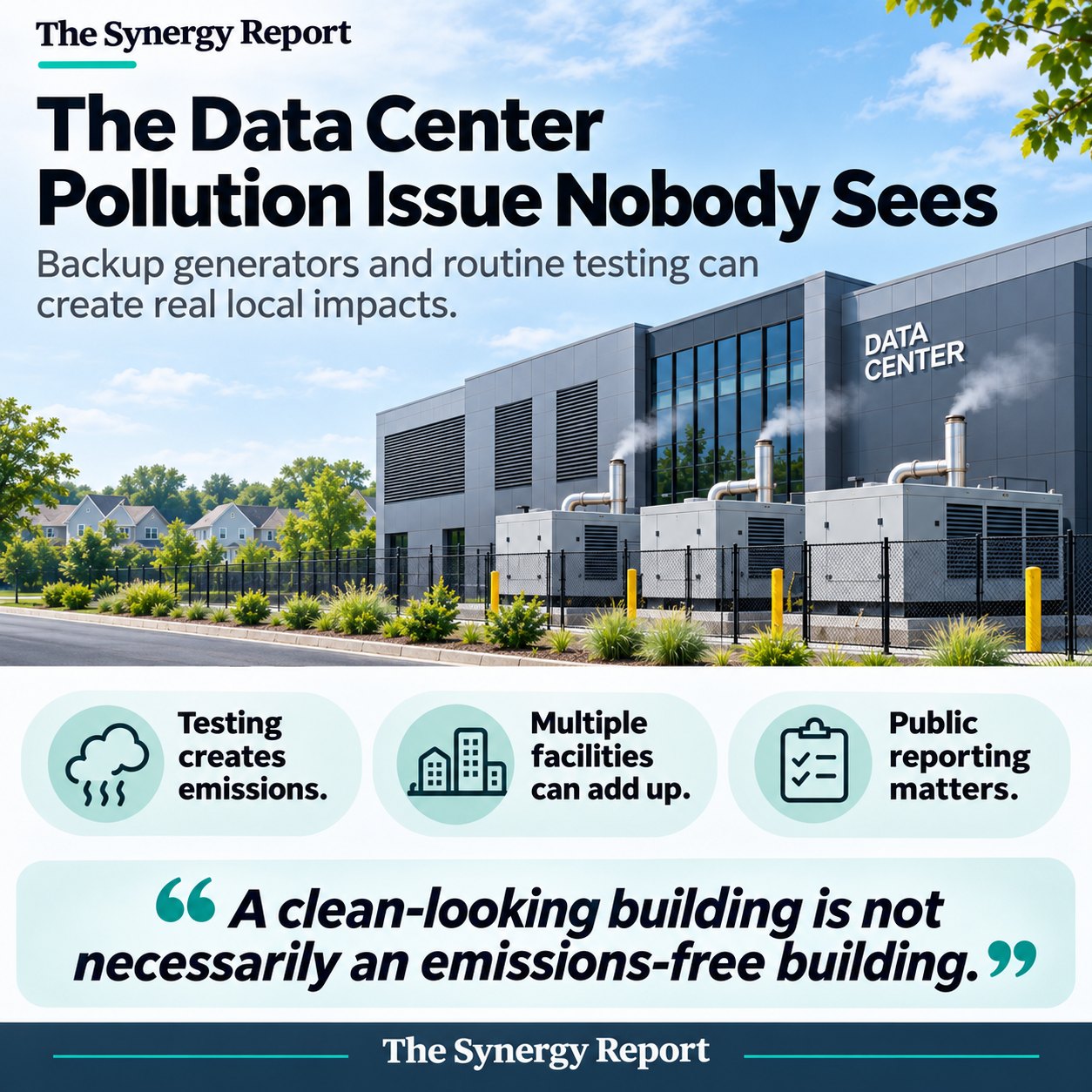
A large data center may have dozens of diesel generators designed to maintain operations when electricity service is interrupted. Although these engines generally operate infrequently, they must be periodically tested to ensure they will function when needed.
That creates an important distinction between a facility’s everyday operations and its potential environmental impacts.
Diesel engines emit nitrogen oxides and particulate matter, pollutants that can affect public health. The significance of those emissions depends on the equipment, operating hours, emissions controls, surrounding land uses, and cumulative exposure.
Most attention during project review focuses on projected emissions and compliance with air quality permits. But communities should also understand what happens after a facility opens.
Washington provides an instructive example.
In Quincy, where multiple data centers operate within a relatively concentrated area, the Washington Department of Ecology examined diesel emissions from backup generators on a community-wide basis. Rather than treating each facility as an isolated development, the analysis considered the cumulative potential health risks from multiple sources.
That is an important lesson for places like South San José, where data center projects may operate near other industrial uses and residential neighborhoods.
Another example comes from Aurora, Illinois. Its 2026 regulations limit simultaneous testing to two backup generators. Jefferson County, Missouri, goes further by establishing scheduling requirements, testing restrictions, and recurring emissions reporting.
These approaches recognize that the problem is not necessarily the presence of diesel generators. It is whether their collective operation is being adequately managed.
California already has an extensive air regulatory structure, including permitting requirements administered by regional air districts. Local governments should not attempt to replace that expertise.
But they can ask whether the permitting process adequately addresses cumulative impacts, whether generator testing is coordinated across neighboring facilities, and whether actual operating information is publicly available.
There is also an important difference between emergency operation and routine testing. Cities can focus on reducing unnecessary neighborhood exposure without interfering with legitimate emergency backup needs.
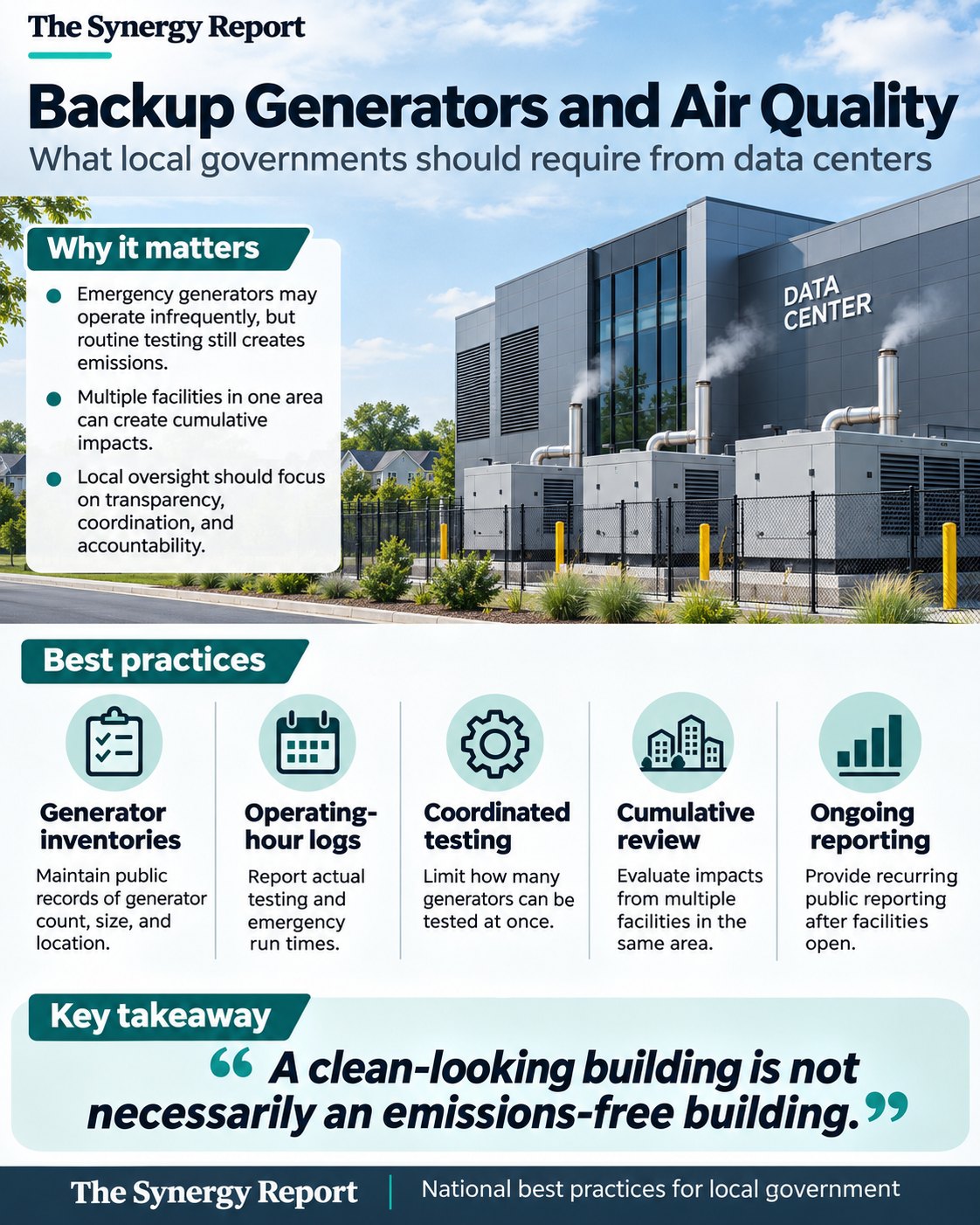
San José should consider requiring data center operators to maintain public-facing generator inventories, disclose actual annual operating hours, and coordinate testing schedules where multiple facilities operate nearby, subject to applicable air district authority.
Those records would help residents and policymakers distinguish theoretical maximum emissions from actual operations.
Data centers are likely to become a permanent part of the region’s economic infrastructure.
The public should not have to wait for a complaint, an equipment malfunction, or another development proposal to learn how their backup power systems are operating.
A clean-looking building is not necessarily an emissions-free building. The relevant question is whether its environmental impacts are measured, reported, and managed.